Issue #319
May 20, 2026
Announcements
Ever wonder how we can turn thousands of unstructured news articles into structured, actionable insights?
In the latest post from Data4Sci, we dive into the fascinating process of transforming raw text from news articles into interconnected networks of information. If you're interested in Natural Language Processing (NLP), entity extraction, and how to connect the dots hidden across massive amounts of unstructured data, this is a must-read!
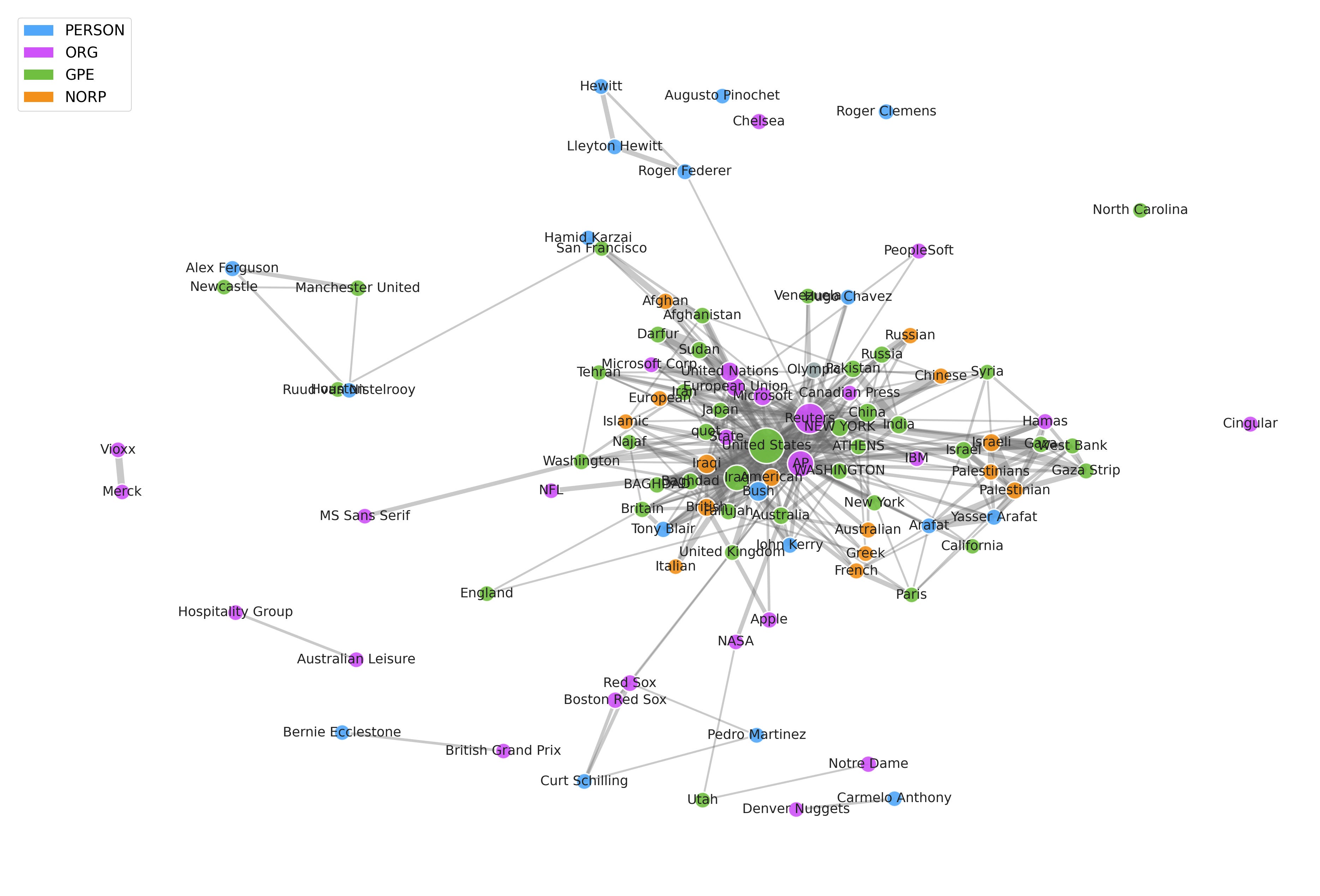
Check it out and Subscribe so you don't miss another post.
Dear Reader,
This week pulls toward smaller, more private AI. A new 26M-parameter function-calling model now runs on very small devices, which makes on-device tool use realistic. That fits with a wider case for running AI locally by default rather than as a backup. Google also rolled out three new ways to build apps with real-world imagery and AI, combining street-level photos with model output.
On the business side, every AI subscription carries a hidden risk for enterprise buyers. Vendors can shift prices, models, or terms overnight. The job market shows early strain, too. Fresh data points to graduates losing entry-level roles to automation. For a change of pace, one piece argues the hard problem of consciousness isn’t really a problem at all, just a confused framing.
On the research side, a new approach called δ-mem cuts the cost of online memory for large language models. Retrieval is getting a rethink too. One paper argues that search agents should interact with the corpus directly rather than rely on semantic similarity. Another sketches what a superintelligent retrieval agent might look like as the next step for information retrieval. Prompting research also got a useful check, with fresh work on baselines and metrics for counterfactual prompting, so claims about prompt tricks can be tested properly.
World models keep gaining ground. A pixel-based joint-embedding predictive architecture shows stable end-to-end training without the usual collapse issues. A broader theory paper ties world models to AGI and the hard problems of life–mind continuity, picking up the thread from the earlier piece on consciousness. Drug history offers a sobering parallel. A look at how GLP-1 development was abandoned in 1990 shows how close miracle drugs can come to never existing. For working scientists, a new guide lays out 10 simple rules for the careful use of generative AI in research.
Our current book recommendation is “LLMs in Production: From Language Models to Successful Products” by C. Brousseau and M. Sharp. In this week’s video, we have a course on fine-tuning models, from Supervised FT to RLHF, LoRA, and Multimodal.
Data shows that the best way for a newsletter to grow is by word of mouth, so if you think one of your friends or colleagues would enjoy this newsletter, go ahead and forward this email to them. This will help us spread the word!
Semper discentes,
The D4S Team

"LLMs in Production: From Language Models to Successful Products" by C. Brousseau and M. Sharp is for data scientists and machine learning engineers who have moved past the “cool demo” phase and now need to ship something people can use. The book focuses on the real work behind LLM products: choosing models, preparing data, building RAG systems, evaluating outputs, controlling cost, managing latency, and deploying reliably.
Its biggest strength is that it treats LLMs as production software, not magic. The authors connect familiar ML concerns—measurement, data quality, feedback loops, monitoring, and trade-offs—to newer LLM-specific patterns such as prompt design, fine-tuning, LoRA, RLHF, hosted APIs, Kubernetes deployment, and edge inference. The hands-on projects help ground the material, especially for readers who want more than another conceptual overview.
The book is not perfect. Some sections move quickly, and experienced MLOps engineers may wish for more depth on architecture, observability, or failure analysis. Its tooling choices may also date quickly, as LLM infrastructure continues to shift. Still, the core value holds: this is a practical guide to thinking like an engineer when working with language models. For anyone trying to turn LLM experiments into durable products, it is an easy book to justify buying.

- 1. There Is No ‘Hard Problem Of Consciousness' [noemamag.com]
- 2. Local AI Needs to be the Norm [unix.foo]
- 3. 26M function call model that runs on incredibly small devices [github.com]
- 4. Three new ways to build with real-world imagery and AI [mapsplatform.google.com]
- 5. Every AI Subscription Is a Ticking Time Bomb for Enterprise [thestateofbrand.com]
- 6. Is AI putting graduates out of work already? [economist.com]
- 7. Crypto Prediction Markets Explained [chainalysis.com]

- • $δ$-mem: Efficient Online Memory for Large Language Models (J. Lei, D. Zhang, J. Li, W. Wang, K. Fan, X. Liu, Q. Liu, X. Ma, B. Chen, S. Poria)
- • Drug Development Failure: How GLP-1 Development Was Abandoned in 1990 (J. S. Flier)
- • LeWorldModel: Stable End-to-End Joint-Embedding Predictive Architecture from Pixels (L. Maes, Q. L. Lidec, D. Scieur, Y. LeCun, R. Balestriero)
- • World models, artificial general intelligence and the hard problems of life–mind continuity: toward a unified understanding of natural and artificial intelligence (A. Safron, M. Levin, V. Klimaj, Z. Sheikhbahaee, D. Sakthivadivel, A. Razi, D. Ha, N. Hay, K. Schmidt, I. Rish, D. Krakauer, M. Mitchell, S. J. Gershman, J. B. Tenenbaum)
- • Beyond Semantic Similarity: Rethinking Retrieval for Agentic Search via Direct Corpus Interaction (Z. Li, H. Zhang, C. Wei, P. Lu, P. Nie, Y. Lu, Y. Bai, S. Feng, H. Zhu, M. Zhong, Y. Zhang, J. Xie, Y. Choi, J. Zou, J. Han, W. Chen, J. Lin, D. Jiang, Y. Zhang)
- • Compared to What? Baselines and Metrics for Counterfactual Prompting (Z. Yang, M. Levy, Y. Goldberg, B. C. Wallace)
- • Superintelligent Retrieval Agent: The Next Frontier of Information Retrieval (Z. Yang, Q. Ma, J. Chen, A. Shrivastava)
- • Ten simple rules for optimal and careful use of generative AI in science (M. Helmy, L. Jin, A. Alhossary, T. Mansour, D. Pellagrina, K. Selvarajoo)

From Supervised FT to RLHF, LoRA, and Multimodal

All our videos are also available in our
YouTube playlist.
Enjoy the newsletter?
Forward it to a friend, or subscribe to get it straight to your inbox.
Subscribe Free