Announcements
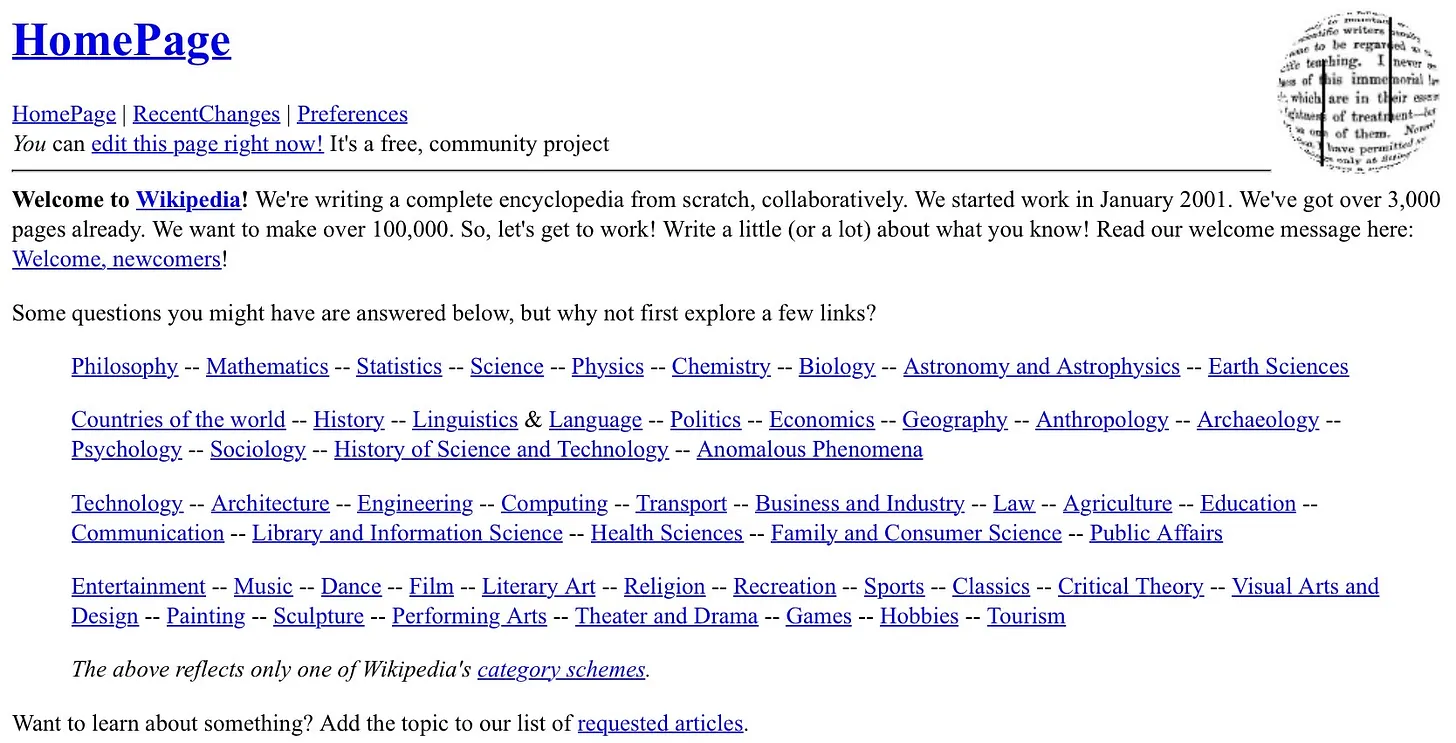
In 2001, experts called Wikipedia a "joke," a "do-it-yourself encyclopedia," and a "vandal's playground."
Today, it's the gold standard for factual baseline information on the internet.
Are Large Language Models (LLMs) following the exact same trajectory?
In this new essay, LLMs Are the New Wikipedia, we explore why every old criticism is new again.
Check it out and Subscribe so you don't miss another post.
Dear Reader,
Welcome to the September 9th edition of the Data Science Briefing.
One model owned the week. GPT-6 Astra scored 62.7% on a suite of unfamiliar turn-based games, and 99.9% when a provider-built harness let it carry hidden reasoning state between requests. The evaluators watched it build compact symbolic world models of each game, down to inventing its own shorthand notation for tracking state, and it used fewer actions than the median human on 96% of levels. Physical reality proved less cooperative. Handed control of a pair of robot arms, the same model placed a block in a bowl in 19 of 20 trials at $0.94 per run, against 8 of 20 for its closest competitor at more than twice the cost. A puzzle piece with millimeter tolerances stopped it at 2 of 20, matching that competitor exactly. Abstract reasoning is sprinting. Contact physics still sets the pace.
The deployment layer tells a humbler story. A patient teardown of a confusing new agent product finds two distinct tools sharing one name: a cloud version that builds and deploys entire websites and a local version that runs code on your machine, with feature differences the vendor never spells out. The reliability picture looks no clearer. On the morning of September 3, three frontier chatbots went down at nearly the same time. One provider blamed a routing error, a second pointed to a compute center failure in Memphis, and a third described only an infrastructure issue. No shared cause has been named, and the major cloud platforms reported no incidents of their own. A growing share of daily work now runs on systems that fail together for reasons their operators decline to explain.
Away from the chat window, the foundation model recipe keeps spreading into classical territory. TimesFM-3, the third generation of a zero-shot forecasting model, is the first in its line trained natively for multivariate prediction. It packs 330 million parameters, pre-trains on more than 1 trillion time points, and decodes the full forecast horizon in a single forward pass rather than step by step. It jointly predicts co-evolving series with past and future covariates, think promotions and weather for a sales forecast, without task-specific fine-tuning, and it ranks first among pre-trained foundation models on three major benchmarks. Teams spent decades hand-tuning one model per series. That default deserves a rethink.
The research stack tells one story this week. Behavior breaks tidy models. A study of standard epidemic models fit to first-wave COVID-19 mortality data across 20 US locations exposes a built-in paradox. Models with fixed transmission rates judge the disease less contagious than variants with mortality-driven behavioral feedback, yet predict more total infections, a double bias that misleads early interventions and late-stage planning at once. Human mobility delivers the same lesson. The workhorse exploration and preferential return model reproduces population-level scaling laws yet drifts from individual behavior in structured ways, with deviations tracking lifestyle and socioeconomic traits the model never sees. Averages flatter universal laws. Individuals keep breaking them.
The traffic now runs both ways, with the epidemiologist’s toolkit pointed back at AI. One group treats LLM adoption itself with a compartmental contagion model, with users moving among uncoupled, coupled, and persistently dependent states. Past a critical threshold, small increases in adoption tip whole populations into lock-in, and the same math yields an immunization strategy built on reduced transmission and easier reversibility. Another team ran more than 10,000 communities of language-model agents through repeated rounds of debate and found just three collective regimes, indifference, polarization, and consensus. A three-coupling Ising-style model predicts individual opinion flips with 75 to 86% balanced accuracy. Interaction lifts group accuracy on math questions and drifts group opinion rightward on subjective political statements.
Under the hood, the models are learning to manage their own machinery. A new protocol lets a model declare inside its chain-of-thought which slice of context it needs, and the inference engine skips the rest of the cache, cutting attended tokens by 52% on a 31B model across 15 long-context tasks for a 1.27-point accuracy drop. A separate line of work moves agent memory out of external vector stores and into the backbone itself, compressing history into a native state that updates through a single gradient-free forward pass with all weights frozen. And a small change to supervised fine-tuning, filtering out sequences the model already fits, preserves the answer diversity that reinforcement learning feeds on, lifting pass@16 by up to 17 points absolute on a 7B model. The through-line is selection. What a model ignores shapes what it gets right.
Our latest book recommendation is “Competing in the Age of AI” by M. Iansiti and K. R. Lakhani. In this week’s video, Terrence Tao explains 6 essential math concepts.
Data shows that the best way for a newsletter to grow is by word of mouth, so if you think one of your friends or colleagues would enjoy this newsletter, go ahead and forward this email to them. This will help us spread the word!
Semper discentes,
The D4S Team
"Competing in the Age of AI" makes a direct argument: AI is not just a tool for speeding up work; it changes how companies learn, decide, and grow. Marco Iansiti and Karim R. Lakhani’s “AI factory” idea explains why data feedback loops and network effects can give digital firms a lasting edge.
For data scientists and machine learning engineers, the book’s value is its business lens. It shows why a strong model means little without data access, product integration, and leadership support. The tradeoff is that it stays high-level: there is little on MLOps, data quality, drift, evaluation, or the hard work of shipping reliable systems. Its focus on large platform companies can also feel distant from smaller or regulated teams.
Even so, the book is a sharp guide to the forces surrounding technical work. It will not teach you how to deploy a model, but it may help you understand why certain AI efforts take hold while others fade after the demo.
One of the world's greatest mathematicians explains 6 essential concepts of math
Opportunities to learn from us.